
Does Wind Resistance Play a Part in Gate Automation?
Does Wind Resistance Play a Part in Gate Automation?
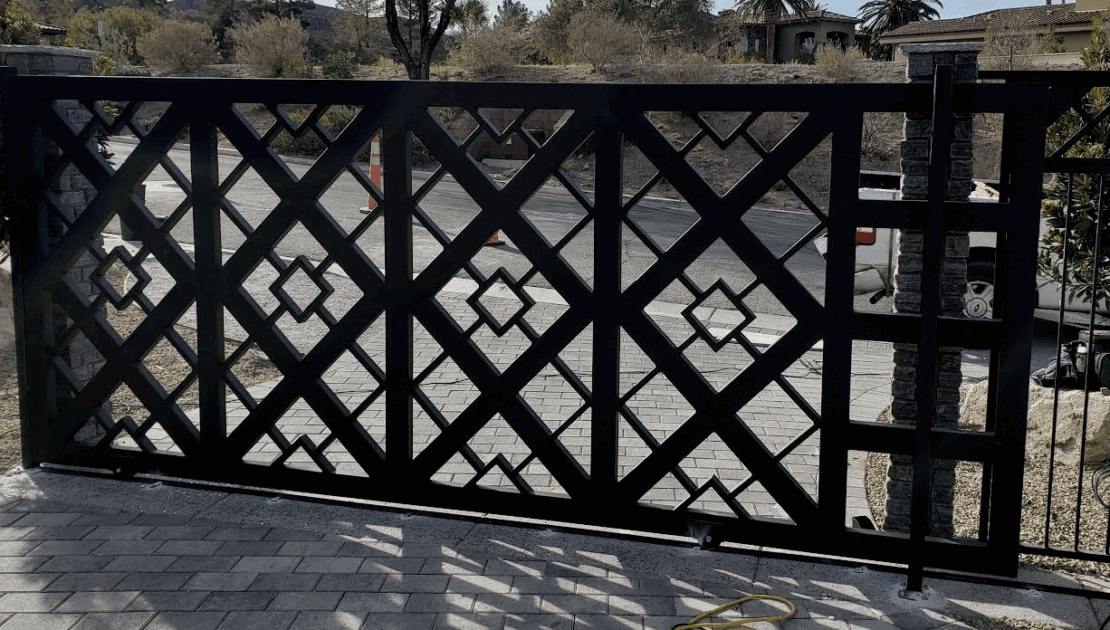
As professionals in the gate automation industry, when we go out to examine an existing gate or a new construction gate, there are a number of important factors we must take into consideration to ensure the proper gate operator and motor application.
Properly Sized Gate Operator / Motor for a Sliding Gate
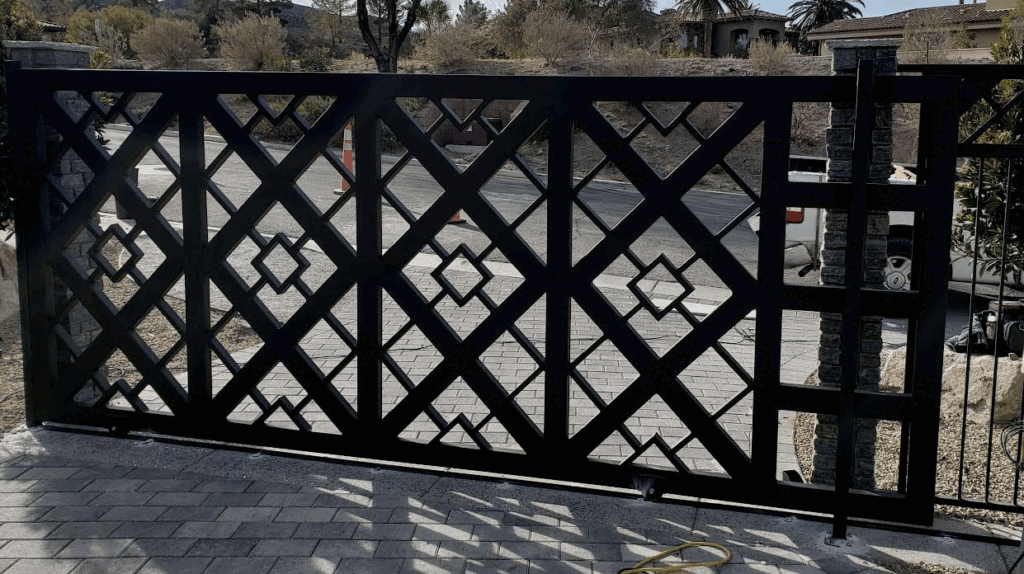
One of the top areas of concern is the weight of the gate. With a sliding gate, the style and quality of the wheels, bearings, and guide rollers play a major role in determining which gate operator or motor we would recommend for proper performance and long-term reliability.
For example, a sliding ornamental iron gate may weigh approximately 800 pounds on its own. If the homeowner or builder installs low-quality wheels with poor bearings, that added resistance can effectively increase the operational load of the gate to 825 pounds or more. In addition, improperly installed guide rollers or guide rollers with failing bearings can pinch the gate, adding even more resistance. Combined, poor wheels and guide rollers can turn an 800-pound gate into an effective operating load of 875 pounds or more.
When we inspect or install a gate operator for a single or double sliding gate, all of these factors must be carefully evaluated before recommending the appropriate gate motor for a residential or commercial property.
One of the advantages of a sliding gate compared to a swing gate is that it maintains at least three consistent anchor points at all times—the two wheels and the guide rollers. Because of this design, wind resistance may still play a role, but it is far less significant than with a swinging gate. Sliding automated gates perform much better in windy environments because there is less leverage for the wind to act upon.
If you live in a windy area and are looking to enhance security for your home or commercial building, it is important to carefully consider the style of ornamental iron gate you choose. Taking wind load and gate weight into account during the design and gate operator selection process will help ensure long-term reliability and performance.
What Is the Proper Size Gate Operator / Gate Motor for a Swinging Iron Gate?
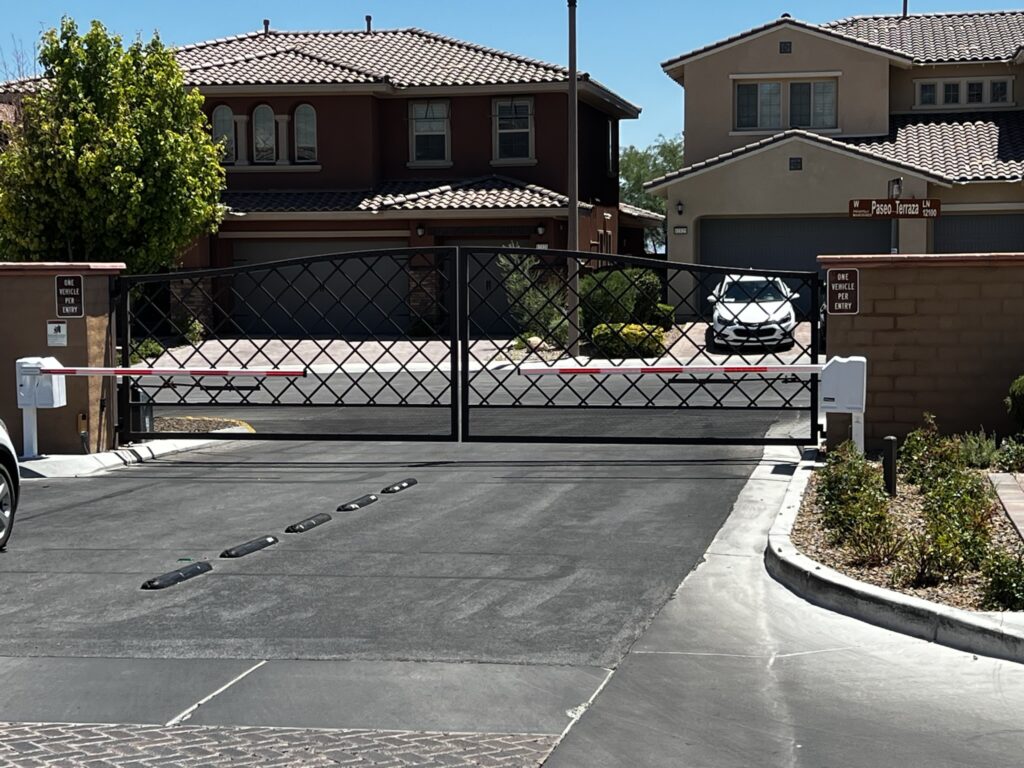
There are several factors to consider when installing a gate motor on a single or double swing ornamental iron gate. One of the first things we evaluate during an inspection is the style and quality of the hinges. High-quality hinges with greased bearings significantly reduce friction and resistance, which directly impacts gate operator performance.
We also examine whether the gate leaf swings uphill, downhill, or is level. Many properties are built on streets with a specific grade or pitch to allow for water runoff, and this slope can add additional strain to a swinging gate operator if not properly accounted for.
Many homeowners choose to add backing material to the backside of their custom ornamental iron swing gates. However, when a gate is automated, the type of backing material used can dramatically affect the gate operator or motor. For example, perforated metal backing requires careful consideration of airflow. If the perforations are too restrictive, the gate effectively becomes a large wind sail.
When wind resistance increases, the gate operator is no longer moving only the weight of the gate—it must also overcome the force of the wind pushing against it. This additional load can lead to premature wear or failure of the gate motor. For this reason, we strongly recommend never installing solid backing on the backside of an automated swing gate.
In Closing
Yes, wind resistance plays a significant role in gate automation, especially when it comes to swinging iron gates. The materials added to the backside of a double swing gate can greatly increase wind load and potentially damage the gate operator. When selecting a gate design, it is always best to choose backing styles that allow for maximum airflow and minimal wind resistance to ensure safe, reliable, and long-lasting gate operation.